


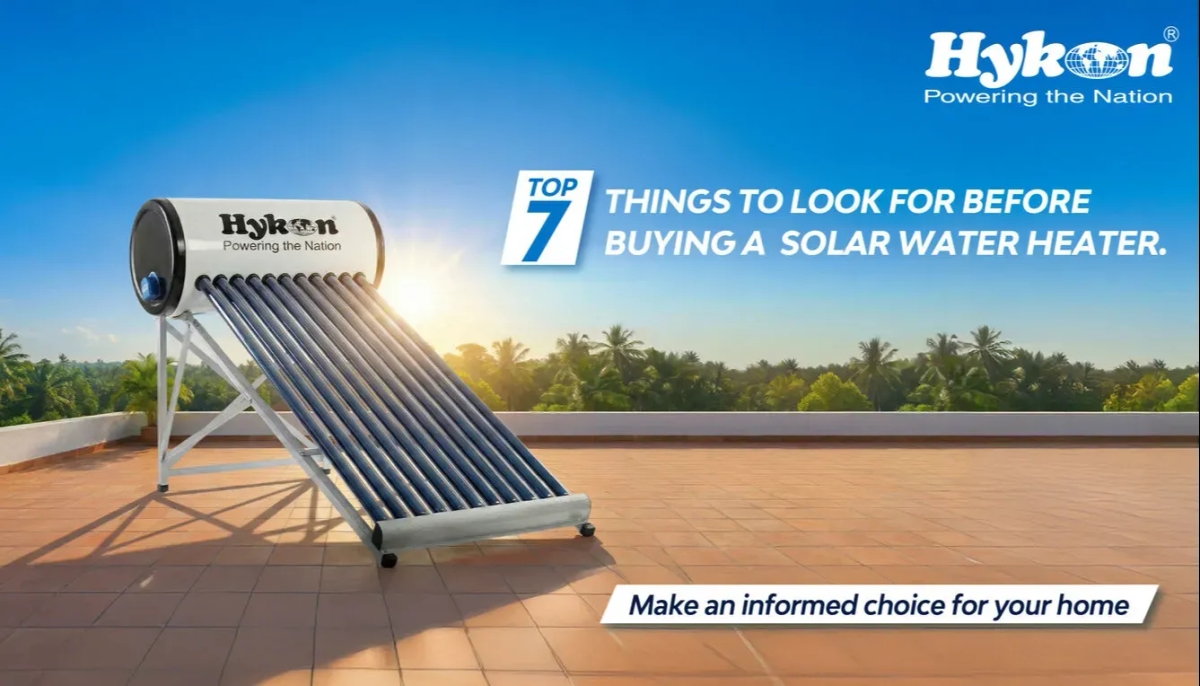
Top 7 Things to Look for Before Buying a Solar Water Heater.
-(3)-converted.webp&w=3840&q=100)
With rising electricity costs and increasing awareness about environmental sustainability, solar water heaters have emerged as one of the smartest investments for modern homes. They use free, renewable solar energy to heat water, helping households significantly cut down on power bills while reducing their carbon footprint. Especially in a country like India, where sunlight is available for most of the year, solar water heaters offer long-term savings and dependable performance.
However, choosing the right solar water heater is not just about picking a popular brand or the lowest price. Several technical and practical factors determine how efficiently the system will perform for your home. To help you make a confident and informed decision, here are the top 7 things you should carefully consider before buying a solar water heater.
1. Local Climate & Sunlight Availability
The performance of a solar water heater largely depends on the availability of sunlight in your region. Areas that receive consistent sunshine throughout the year are ideal for solar water heating systems. Before purchasing, it’s important to understand your location’s average sunshine hours and seasonal variations.
For instance, regions with clear skies and strong sunlight will allow the system to heat water quickly and efficiently. In areas that experience frequent cloudy days, fog, or heavy rainfall, you may need a more efficient collector type or a system with better heat retention. Understanding your local climate ensures that you select a solar water heater that delivers reliable performance throughout the year.
Hykon solar water heaters are designed to perform efficiently even in regions with varying weather conditions, making them suitable for most Indian climates. Areas with good sunlight exposure will experience faster heating and higher efficiency, while proper system sizing and installation angle help maintain reliable performance during cloudy days or seasonal variations.
2. Water Usage & Capacity Requirements
Choosing the right capacity is crucial for both comfort and cost efficiency. A solar water heater that is too small may fail to meet your daily hot water needs, while an oversized system may lead to unnecessary expenses.
Here is a general guideline based on household size:
1–3people: 100 liters
4 people: 150 liters
6 people: 200 liters
8 people: 260 liters
Large families or commercial use: 300 liters or more
Choosing the right capacity solar water heater is essential to ensure adequate hot water for daily needs without wastage. Hykon solar water heaters are available in various capacities to suit different household sizes and usage patterns, from small families to larger residential or commercial requirements.
The ideal capacity depends on the number of users, frequency of hot water usage, and applications such as bathing, washing, or kitchen use. Proper capacity selection ensures consistent hot water availability, improved energy efficiency, and optimal system performance while maximizing long-term cost savings.
3. Type of Solar Water Heater
Solar water heaters mainly come in two types, and choosing the right one plays a key role in efficiency and durability.
Flat Plate Collectors (FPC):
These systems are known for their strong build and long lifespan. They perform well in areas with high temperatures and are resistant to dust, hail, and rough weather conditions.
Evacuated Tube Collectors (ETC):
ETC systems are highly efficient, especially in colder regions or areas with limited sunlight. Their vacuum tubes reduce heat loss, allowing them to perform better during cloudy days or winter seasons. They are lighter in weight and heat water faster.
Understanding your climate and usage needs will help you select the most suitable type for your home. Hykon solar water heaters use Evacuated Tube Collectors (ETC) that efficiently absorb and retain heat, even in low sunlight and colder conditions. This technology ensures faster heating, reduced heat loss, and reliable hot water availability throughout the year.
4. Roof Space & Installation Angle
Before buying a solar water heater, inspect your roof space carefully. The roof should have enough open area to install the collectors without obstruction from nearby buildings, trees, or water tanks.
The orientation and tilt angle of the system are equally important. In India, solar panels should ideally face south to receive maximum sunlight. The correct tilt angle allows better absorption of solar energy throughout the year, improving heating efficiency.
Additionally, ensure that your roof can support the system’s weight, especially for larger capacity models. Proper installation directly affects performance, so professional assessment is highly recommended. Hykon solar water heaters are well suited for sloped roofs, as they can be securely installed to align with the roof angle for maximum sunlight absorption. This ensures efficient performance, easy installation, and optimal use of available roof space.
5. Material Quality & Durability
A solar water heater is a long-term investment, so quality should never be compromised. Look for systems made from durable and corrosion-resistant materials.
Key components to check include:
Storage tank: Prefer stainless steel tanks for better corrosion resistance and longer life
Collector frame: Should be rust-proof and strong enough to withstand weather conditions
Insulation: High-quality insulation reduces heat loss and keeps water hot for longer durations
A well-built system not only performs efficiently but also reduces maintenance costs and increases overall lifespan.
Hykon solar water heaters are built using high-quality, corrosion-resistant materials that ensure long-lasting performance even in harsh weather conditions. The robust construction enhances durability, reduces maintenance needs, and delivers reliable hot water for years.
6. Warranty & After-Sales Service
Warranty coverage is a strong indicator of product quality and manufacturer confidence. Always check the warranty offered on key components such as the tank, collectors, and accessories.
Hykon solar water heaters come with a reliable warranty and strong after-sales support, giving customers complete peace of mind. With a wide service network and trained technicians, Hykon ensures quick assistance and long-term system performance.
7. Amazing ROI
While the initial cost of a solar water heater may seem high compared to conventional electric or gas heaters, the long-term savings are substantial. Solar water heaters drastically reduce electricity or gas consumption, leading to lower monthly utility bills.
When evaluated over its lifespan, a solar water heater proves to be a cost-effective and environmentally responsible choice.
Investing in a Hykon solar water heater offers excellent return on investment (ROI) by significantly reducing electricity or gas bills from the very first year. Over time, the savings on energy costs help recover the initial investment while delivering long-term financial and environmental benefits.
Conclusion
Buying a solar water heater is more than just a household upgrade—it is a smart investment in energy efficiency, sustainability, and long-term savings. By carefully considering factors such as climate, capacity, system type, installation requirements, material quality, warranty, and cost benefits, you can choose a system that perfectly suits your needs.
With the right solar water heater, you enjoy reliable hot water every day while contributing to a cleaner and greener future. Make an informed choice today and let the power of the sun work for your home—efficiently, economically, and sustainably.
Hykon’s solar water heaters offer an efficient, reliable, and eco-friendly solution for meeting daily hot water needs. With advanced technology, durable materials, dependable after-sales support, and strong long-term cost savings, Hykon systems provide a smart investment for homes and businesses looking to reduce energy costs and embrace sustainable living.
Related Blogs


.webp&w=3840&q=100)

.svg)